
Generate Ideas
Brainstorm

When to use it
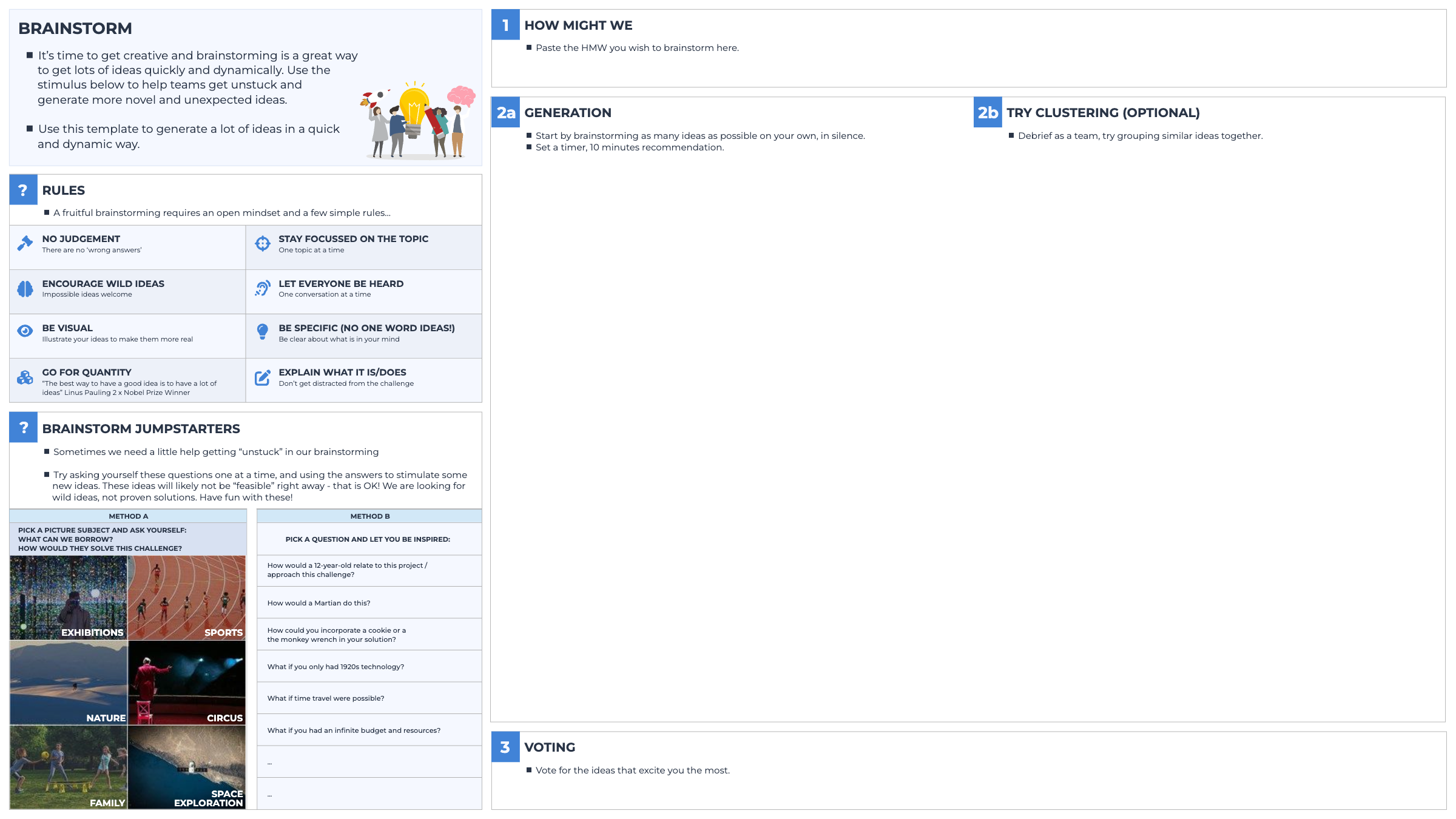
Use this template to generate a lot of ideas in a quick and dynamic way.
What’s the purpose
Brainstorming helps you move from ‘what you know’ to ‘what could be’. The purpose of this tool is to bring a diverse group of people together to come up with as many solutions as possible for the problem you are trying to solve.
How to do it
- As a group, start by reading through the brainstorming rules. They will get you get into the right mindset and help you achieve a fruitful outcome.
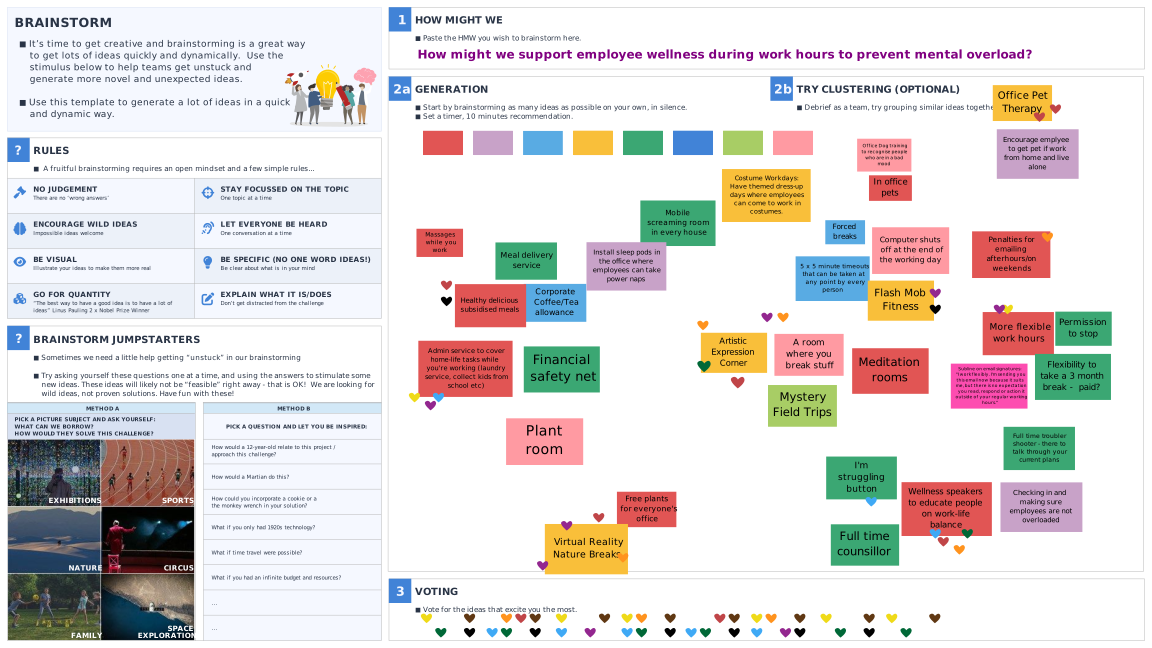
- Now, write down your How Might We question (your challenge) in step one of the ‘Brainstorm’ template.
- Start a timer for a short period of time and allow everyone to add ideas individually in silence to the space in step two.
- Debrief as a team by sharing your ideas with one another. As you share, build on one another’s thoughts and cluster similar ideas next to each other. You can then do another round where you each add more ideas or build on existing ones based on the conversations you’ve had.
- If you get stuck and need some inspiration for more ideas, use the "brainstorm jumpstarters" on the template to help spark your thinking. Wild ideas are welcome at this stage, so don't be afraid to let your mind run wild.
- When you're all out of ideas, use the emoticons to vote for the ideas that excite you most. It's helpful to remind the group of the challenge you are trying to solve right before voting. This will help ensure that the solutions you move forward with are addressing the right needs.
- Finally, run a quick count to identify which ideas have the most votes.
Tips
- A diverse group of people will help you generate the best ideas in a brainstorming session, particularly as you build on one another’s thinking.
- Constraints are good and although they put you under pressure, this is often when we come up with the best ideas. Time box each step to keep momentum during the session.
- Sometimes it's helpful to rewrite a top voted idea, particularly after clustering similar ones together, to ensure that it clearly captures the group's thinking. Be careful, however, not to combine multiple different ideas into one during this process, as you will end up with “idea soup” which dilutes the core concept.
In day-to-day work
When tackling any problem in your day-to-day work, brainstorming is a quick and easy way to develop many possible solutions. Imagine, for example, that many people in your company are complaining about long queues in the work canteen.
Teams might run a brainstorm focused on the challenge “How might we help employees save time getting their lunch to give them more time to relax and enjoy their break?” Collaborative thinking will help you generate diverse and creative ideas to solve the problem. You’ll be surprised what people come up with!