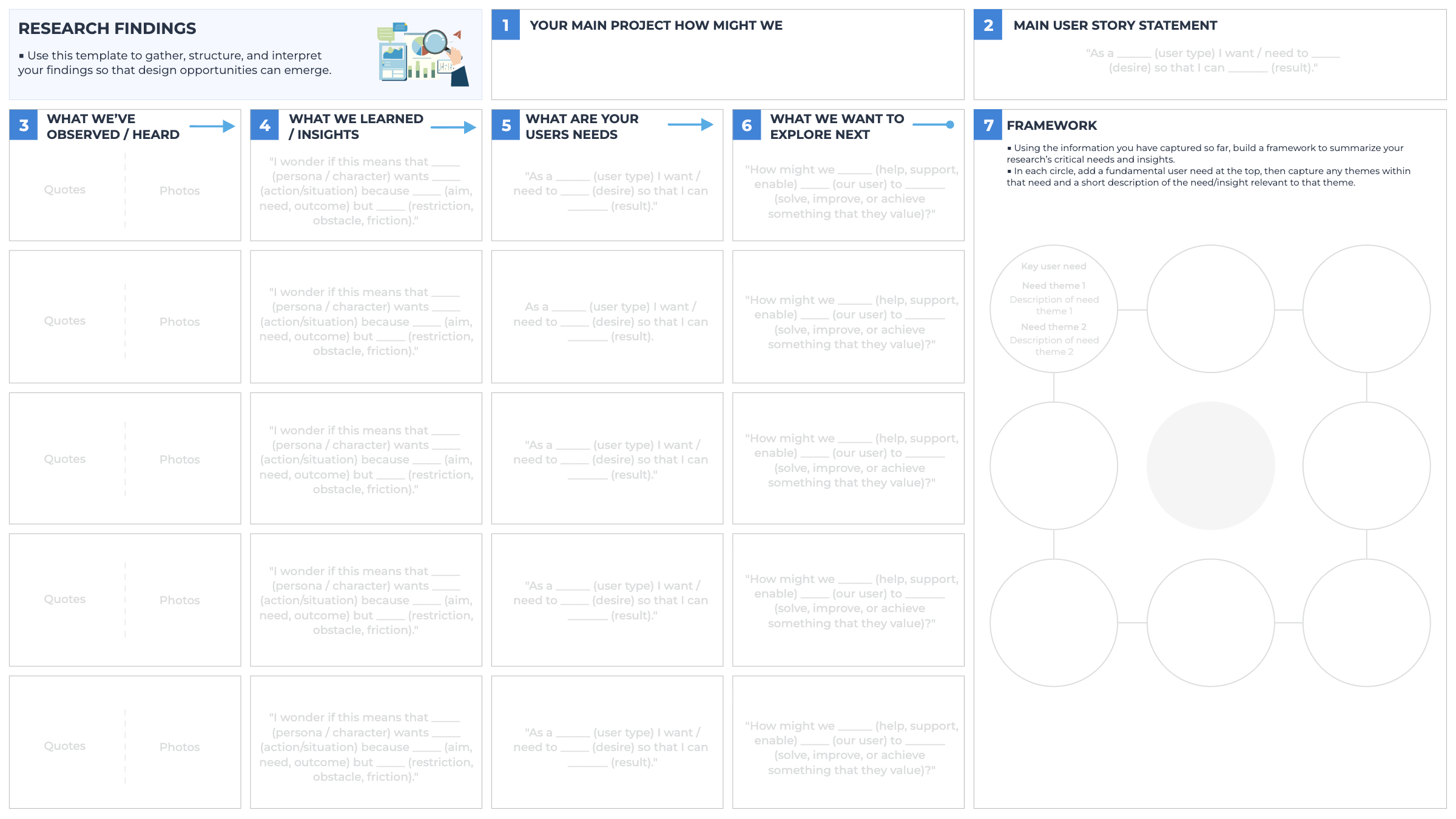
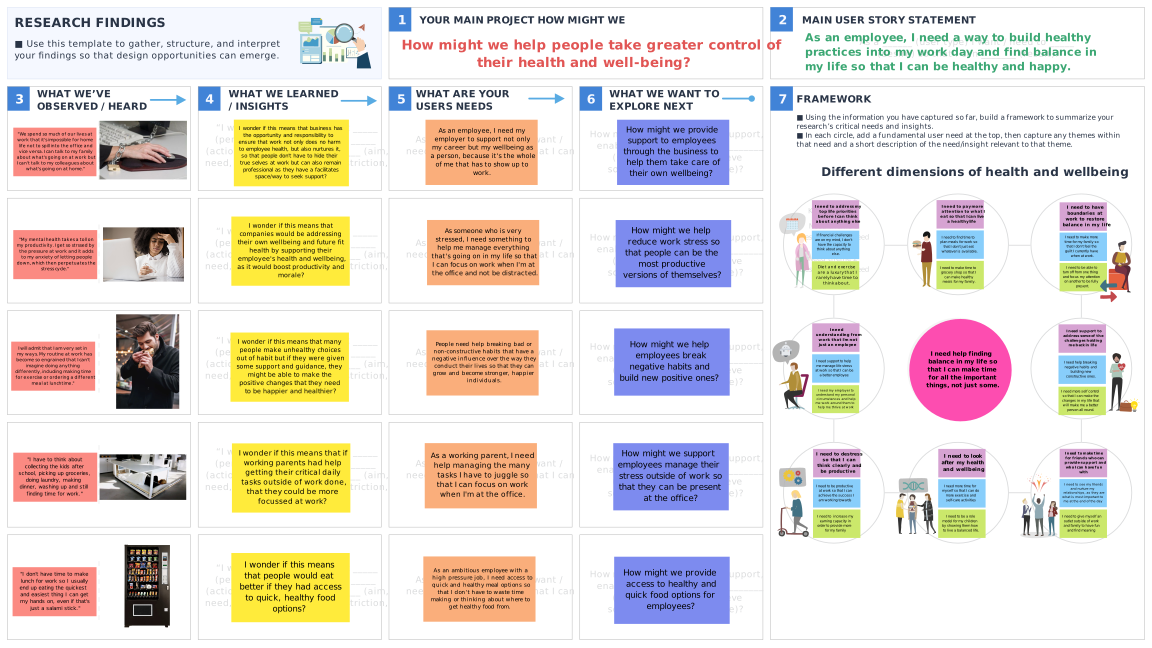
Use this tool to gather, structure and interpret your findings so that design opportunities can emerge.
What’s the purpose
During field research, designers often use various different methods to gather a large amount of information. Organizing and analyzing your findings is an important part of the process that helps us to filter through everything to decipher the greatest opportunities to meet user needs.
How to do it
Begin by adding your main project ‘How Might We’ statement in step one.
Then, outline the key user story statement which describes the overarching need that your How Might We addresses.
In steps 3-6, break down each of your key observations, the insights you gleaned from them, the user need associated with each insight, and the opportunity presented by it.
In step seven, create a framework to summarize your findings. Begin by placing your overarching user story statement in the centre of the framework. Then, in each of the surrounding circles, add a key user need at the top, any themes within that need, and a short description of the need/insight relevant to each theme. Example:
Key user need: To collaborate productively, I need to work with others in person
Need theme: Connecting with others for support and shared energy
Description/insight: Working from home stifles creativity because individuals feed off each other’s energy and thoughts
Blank templateCompleted Research Findings Template Example
Tips
Take your time during this step and keep digging beyond the obvious. Meaning often gets uncovered in layers and allowing some incubation time can help you find the inspiration needed to develop more creative solutions.
In day-to-day work
When you next find yourself working through what might feel like a sea of information, use the ‘Research Findings’ template to guide you through a structured process to find meaning. Visualizing a summary of your work will help to provide clarity for the process ahead.