Use this tool to plan out your field research during the empathize phase.
What’s the purpose
The research phase is all about getting to understand your user and your challenge as much as you can. There is a lot of work to do and a lot of information to process, so planning your research is a great way to get organised and stay on track.
How to do it
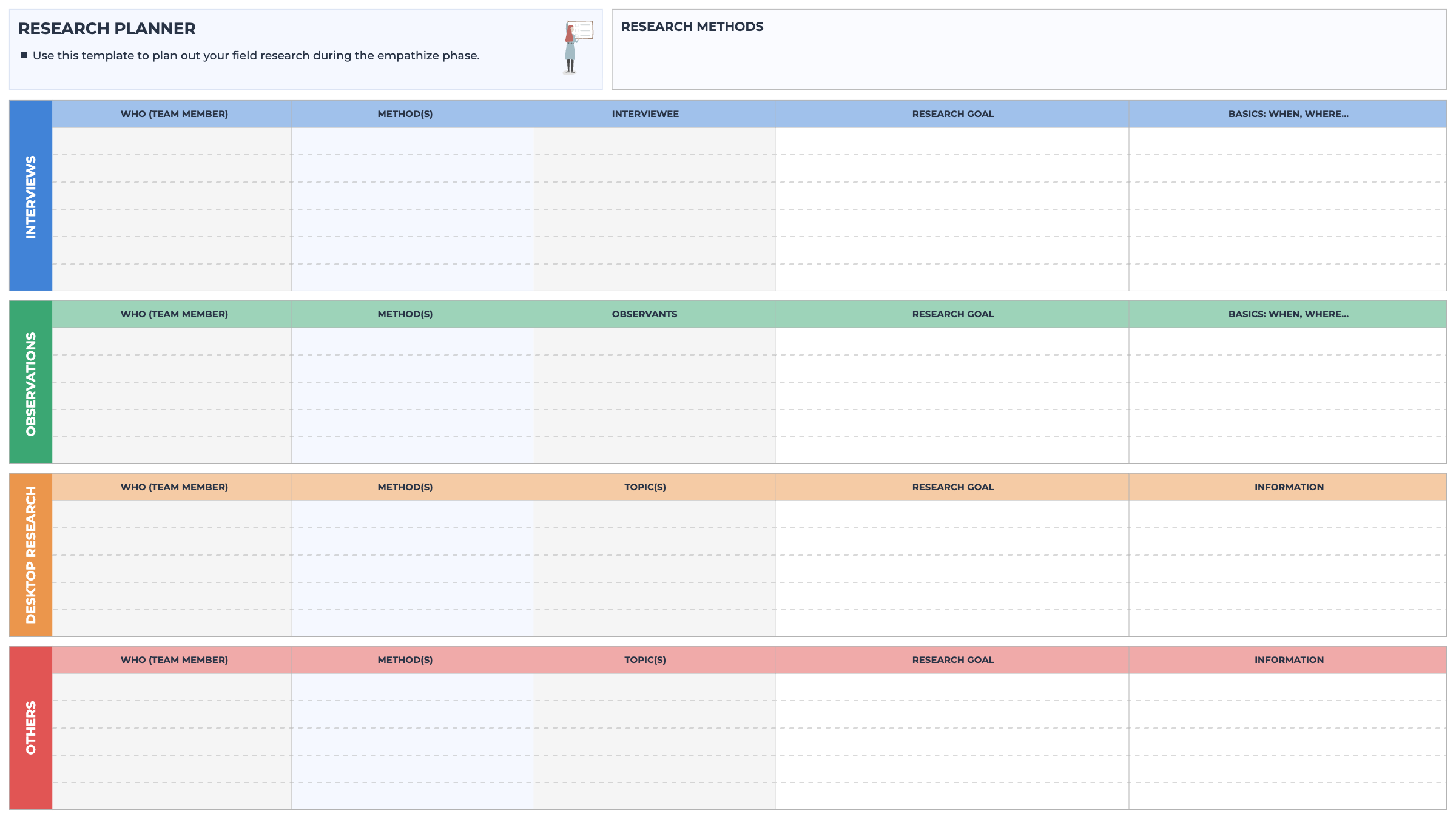
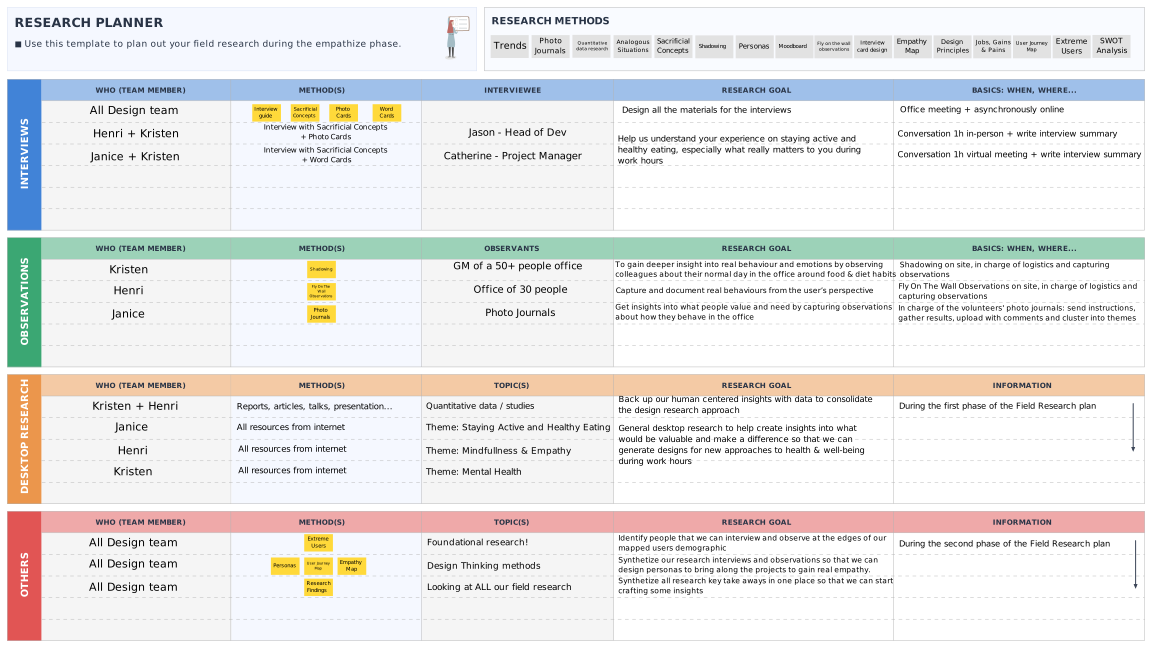
Using the ‘Research Planner’ template, write down who you plan to interview, which topics you will research and any other research you might do during the empathize phase.
Try to be as comprehensive as possible, noting down specific names of people you might talk to, places you need to visit and the goals you’d like to achieve in each step.
If you will be working with anyone else on these tasks, clearly state who will be doing what.
Blank templateCompleted Research Planner Template Example
Tips
Once you’ve completed the ‘Research Planner’ template, you might want to transfer your interview planning notes to the ‘Interview Planner’ template where you can flesh out your conversation planning in more detail.
Get inspired from this research prompts list: any trends research available on the internet, do a photo study, build up a moodboard, analyse quantitative data, search analogous situations, create sacrificial concepts, schedule shadowing session, design persona.
Do not hesitate to bring the action list back into your work calendar.
In day-to-day work
If you need to undertake any research for your work, having a research plan will help you divide and conquer the workload. This will help distribute the work across team members and that you avoid duplication, wasted effort, and information dead ends.
Grab a few colleagues and spend 15 minutes using this tool to help you create a quick plan to ensure you know what methods you’ll use, whom you will speak to and who is responsible… and, of course, by when you need to get this done.